What a Coffee Shop Taught Me About the Future of Human Connection
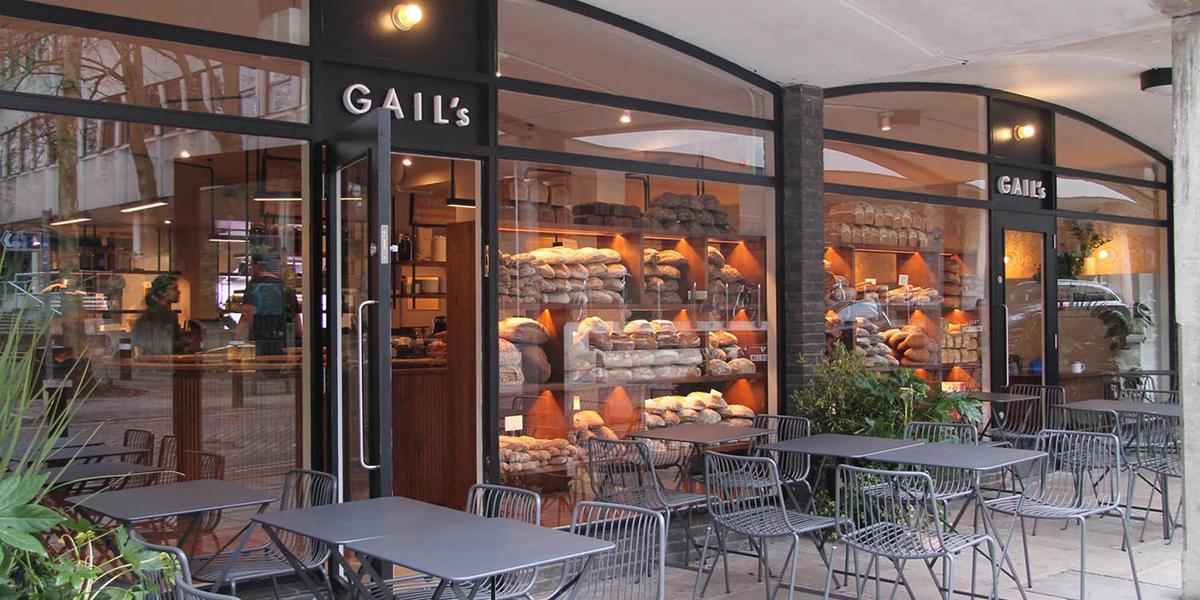
Photo: GAIL’s Bakery, Oxford.
As businesses race towards automation, my year at Oxford taught me that one of the most valuable things a company can offer may be remarkably old-fashioned: being remembered.
Oxford has a way of humbling you. You arrive confident, then find yourself in rooms where everyone seems to know something you don’t. Some weeks, everything lands at once: a rejection you weren’t expecting, a paper you can’t quite get right, money running low, and deadlines that somehow chose the same week. My friends have a name for it that starts with "cluster" and gets considerably less polite from there. I’ll stick with the version I can say in front of my mother: Cluster Chaos, or CC season. As an introvert, by that point you don’t necessarily want advice. You’ve simply run out of people-energy.
One of those weeks, I walked into GAIL’s, the bakery near my college, St Cross. One of the staff looked at me and said, "You don’t seem very happy today." I told her, briefly, what was going on. She stopped, listened, and then made my coffee.
None of that was particularly extraordinary, which is exactly why I’ve kept thinking about it. Listening to me wasn’t in her job description, and neither was remembering my order or noticing when I wasn’t myself.
But I started seeing it everywhere at GAIL’s. I was sitting in a corner one morning when a man walked in and one of the staff gave him a high five, like there was a running joke between them.
My own order doesn’t need to be said out loud anymore, either: a hot oat latte, extra hot, with honey, or a matcha on the days I switch it up. On the mornings I skip the honey, she still asks, "What about the honey today?"I say, "Not today," and that’s the whole exchange. Four seconds, and somehow the morning feels less flat.
The economics of being remembered
There’s no KPI for noticing that a regular customer is having a terrible week, and it won’t appear on a quarterly dashboard. But these interactions have real economic value, because they create something companies spend enormous amounts of money trying to buy: loyalty. The coffee is good, and the pastries have conducted their own sustained attack on my student budget, but the product alone isn’t what kept bringing me back. People sometimes tell me GAIL’s is expensive. Fair enough. But cheap coffee served by someone who makes an already bad morning worse is its own kind of false economy.
That kind of attention is easy to offer once. GAIL’s has to offer it at scale. The business traces its roots to the early 1990s, when baker Gail Mejia was producing bread for London restaurants from three garage bakeries. The first GAIL’s neighbourhood bakery opened in Hampstead in 2005, and today the business has more than 175 bakeries across the UK. That growth makes my small interaction in Oxford more interesting, because it raises an obvious question: how does a business scale to hundreds of locations without standardising away the human qualities that made people want to return in the first place?
Outside GAIL’s, there’s always a bowl of water for dogs. I’ve watched staff greet them, chat with children, and make them feel as welcome as the person actually buying the coffee. These are tiny details, but that is how a place develops a reputation for warmth. You don’t necessarily have to be the paying customer to be treated like you matter. A welcoming place is rarely built through one grand gesture. It’s built through hundreds of small ones.
What AI should never automate
I’ve spent much of this year thinking about artificial intelligence and governance, and oddly enough, a bakery is where part of that thinking crystallised. GAIL’s already uses technology: an app, digital ordering, contactless payment. Businesses should use these tools, since technology can remove friction and make transactions more efficient. But efficiency isn’t why I return. I return because somebody looks up, remembers, asks a question, and actually waits for the answer.
The real business question isn’t how much we can automate. It might instead be what we should automate so that people have more time to be human. A system can remember my usual order, but a person can remember that the last time I ordered it, I was having a terrible week. Those are not the same thing.
Businesses everywhere are experimenting with AI assistants and increasingly sophisticated personalisation, and much of it is useful.
But personalisation and relationship are not the same thing: knowing what I usually buy is personalisation, and knowing me is different. Companies that treat the two as interchangeable risk optimising away part of what makes customers want to return. Automation can make a transaction efficient, but it cannot, on its own, make somebody feel welcome.
I’ll soon be leaving Oxford and heading back to Kenya. I recently told one of the GAIL’s staff that one strangely difficult part of leaving would be waking up without my usual walk there to start the day. She laughed and said, "Maybe you’ll open a franchise there." Maybe I will.
But what I’d want to replicate isn’t simply the coffee. It’s the ability to notice, remember, and make people feel seen.
I now know GAIL’s was named after its founder, Gail Mejia. Before I knew that, though, I had invented my own slightly questionable acronym: Greatness And Intentionality Last Strong. As I write this from GAIL’s, coffee beside me, perhaps the wording needs work.
The idea doesn’t.
As companies race to understand what AI will do to customer experience, the businesses worth watching may not be those that automate the most. They may be those that understand what technology can improve, and what should never be automated away.
Sometimes loyalty starts with something as simple as remembering the honey.

About the author
Memo Some is completing a Master of Public Policy at the Blavatnik School of Government, University of Oxford. Her work spans wildlife conservation in Kenya, climate policy and institutional reform, though these days she can often be found writing over a cup of coffee at GAIL’s.
Disclosure: Memo was not paid by GAIL’s for this piece, and nobody at GAIL’s asked her to write it. She is simply a loyal customer who loves her local bakery and appreciates the warmth she receives in return.