Nairobi National Park Roundtable (NNP)
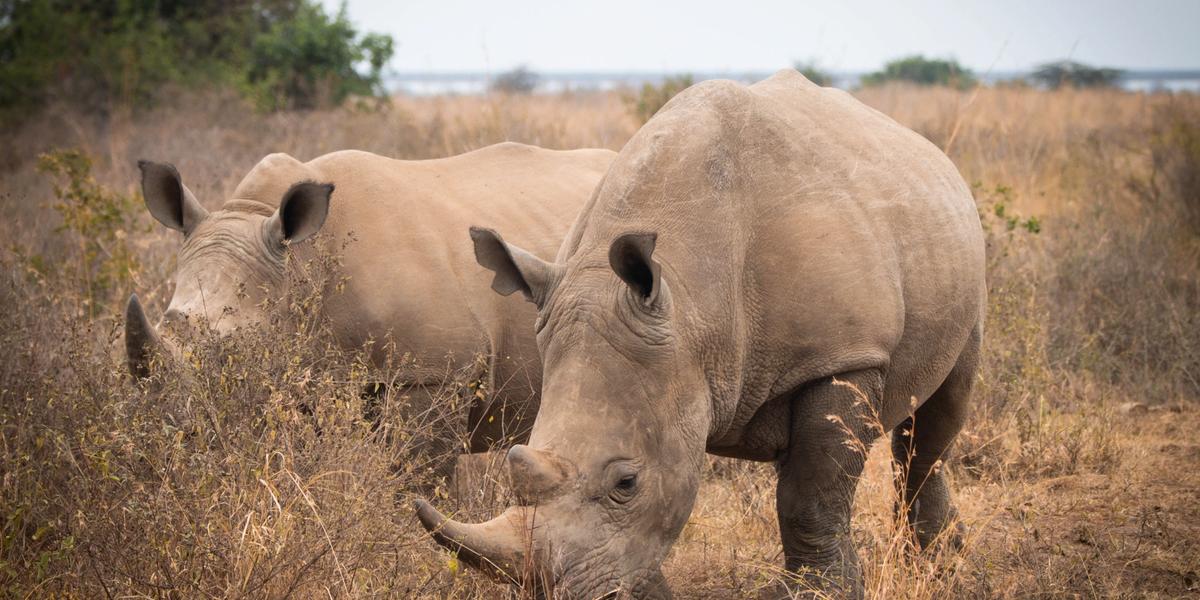
Nairobi National Park (NNP)
During Hillary's term at the Blavatnik School of Government at Oxford University, I will lead a roundtable discussion with students from the Master in Public Policy (MPP) program, the Sustainability Cluster, biologists, and economists to examine the Nairobi National Park case study. The discussion will explore the park’s complex environmental, social, and economic challenges, with the goals of:
- Understanding the ecological and conservation dynamics of Nairobi National Park.
- Assessing the social and economic impacts on the communities surrounding the park.
- Identifying actionable policy solutions that balance environmental protection with sustainable development..
Students question
How can Kenya reform development planning and governance around Nairobi National Park to create outcomes that are simultaneously beneficial for the economy, surrounding communities, and the ecological system?
The Case Study
Nairobi National Park (NNP), gazetted in 1946, is Kenya’s first national park and the only one located within a capital city. Covering just 117 km2 south of Nairobi’s central business district, it uniquely combines urban proximity with wildlife conservation. Historically, the park supported large migratory herds, including up to 30,000 wildebeest in the 1970s and 1980s, and was home to a thriving lion population, notably the Kingfisher pride. Over time, rapid urban expansion, infrastructure development, and human settlement have fragmented habitats and disrupted migration corridors, severely impacting wildlife populations. Wildebeest migrations that once numbered around 30,000 animals have declined to roughly 200 today, while warthog, waterbuck, hartebeest, and gazelle populations have fallen by about 70% over the past 40 years. Cheetahs are now locally extinct, leopards are extremely rare, and the lion population has dropped below 20, with only two adult males remaining, creating severe inbreeding risks. Bird populations remain healthy, with over 400 species recorded in the park. Without urgent conservation measures, lions could face local extinction, threatening the park’s ecological balance and Biodiversity.
Despite its small size, Nairobi National Park is a major contributor to Kenya’s wildlife tourism sector, generating about KSh 1.2 billion (~USD 8 million) in 2023/24. Its high revenue is driven by location, visitor numbers, and digitised entry fees. In late 2025, the Kenya Wildlife Service proposed raising fees for East African citizens to KSh 1,000 and for Kenyan residents to KSh 1,350, while international rates remained unchanged at USD 80 for adults and USD 40 for children. The High Court temporarily suspended the increase for local visitors following public petitions, keeping the old rates (KSh 430 for Kenyan/East African adults, KSh 215 for children). The proposed hike, along with digital processing fees, sparked protests from tourism groups over reduced accessibility for locals. While higher fees could fund conservation and curb overtourism, the controversy highlights the challenge of balancing economic sustainability, accessibility, and ecological protection.
However, the park’s economic success has not translated into equitable benefits for surrounding communities. The Maasai people, who lived in and around NNP prior to its gazettement, gain little from tourism due to weak benefit-sharing mechanisms. They continue to face human–wildlife conflict, restricted land use, and economic pressures that force the sale of ancestral land, which further fuels unplanned development around the park. With Kenya’s poverty rate at 33% and rural households near the park earning well below the national average, these challenges exacerbate inequality. Large infrastructure projects are frequently approved with minimal community consultation, reinforcing perceptions that economic benefits accrue to politically connected actors while local costs remain high.
Beyond its economic value, Nairobi National Park serves as a “classroom without walls,” connecting city dwellers with wildlife, providing recreational and therapeutic space, and acting as a major carbon sink. Yet urban development and poor planning are driving wildlife declines and risking local extinctions. Economic pressures and poverty are eroding local communities’indigenous knowledge, weakening conservation efforts, and threatening the park’s benefits. Without urgent action, what once generated millions of dollars and safeguarded Nairobi’s environment could be lost.
https://nairobipark.org/conservation-at-nairobi-n-park/
https://www.tourism.go.ke/wp-content/uploads/2025/04/Wildlife-Bill-2025-1.pdf